
Exploring Strategic Minerals, Global Demand, Investment, Governance, and Regional Impacts
Africa’s vast deposits of critical minerals are increasingly at the centre of global industrial and geopolitical competition as the world transitions towards renewable energy and advanced technologies.
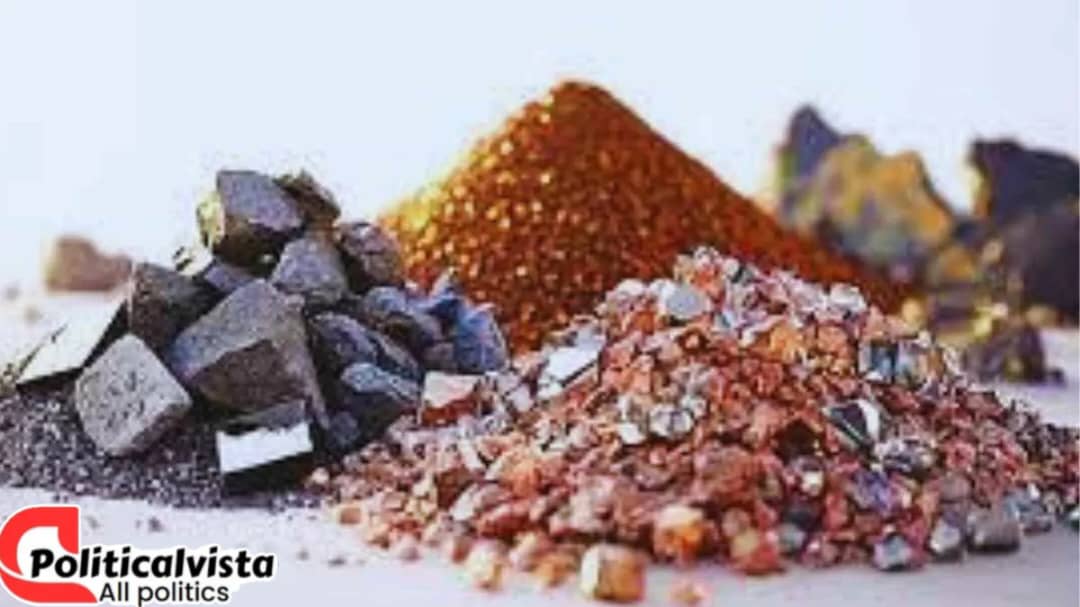
With an estimated 30 per cent of the world’s critical mineral reserves, African nations are positioned as essential suppliers of raw materials such as cobalt, lithium, copper, graphite, manganese, and rare earth elements that are vital for electric vehicles (EVs), renewable energy systems and high-tech industries.
Critical minerals, defined as those required for modern technology and considered economically or strategically important, have heightened global importance as supply chains restructure to meet climate goals and diversify sources away from dominant producers. African governments and foreign investors are actively negotiating access to these minerals, creating a modern-day scramble for resources that echoes historical patterns of external interest in the continent’s natural wealth.
Mineral Wealth and Strategic Deposits
Africa’s geology endows the continent with abundant deposits. The Democratic Republic of Congo (DRC) alone produces more than 70 per cent of the world’s cobalt, a critical component of lithium-ion batteries, while South Africa holds vast manganese and platinum group metals (PGMs) essential for industrial and green technologies. Zimbabwe has become a notable source of lithium, and countries such as Mozambique, Namibia, Ghana, and Tanzania host significant reserves of graphite, copper, and rare earth elements.
Cobalt, lithium, graphite, and copper are in particularly high demand due to their use in battery cathodes, electric motors, solar panels, and wind turbine components. As global production of EVs and renewable energy escalates, the demand for these minerals is projected to rise sharply.
Global Demand and Strategic Importance
International forecasts suggest demand for critical minerals could double or more by 2040 as the energy transition accelerates. Lithium demand alone is expected to quintuple over the next decade, while requirements for cobalt and rare earth elements will also expand significantly in support of electrification and clean energy technologies.
Africa’s mineral exports feed into global supply chains that underpin the production of EV batteries, renewable energy infrastructure, semiconductors and defence systems. As such, critical minerals are increasingly labelled as strategic resources in international policy frameworks.
Foreign Investment and Geopolitical Competition
China’s Dominant Position
China has established a dominant role in Africa’s critical minerals sector through substantial mining investments, infrastructure financing and strategic partnerships. Chinese firms are present across key mineral projects, and the country controls a significant share of global refining capacity for rare earth elements and battery materials.
Recent developments highlight this influence. For example, Chinese company Zijin Mining announced that it is preparing to begin lithium production in the DRC’s Manono deposit in June 2026, marking the country’s first formal output of the battery metal from that site.
China’s comprehensive approach often combines upstream mining rights with downstream processing, aiming to secure long-term supply chains feeding its manufacturing sector.
Western and Other Strategic Partnerships
Western countries, including the United States and European Union, are also pursuing access to Africa’s critical minerals, though often with different investment models and priorities. Strategic infrastructure projects such as the Lobito Corridor, backed by the U.S. and EU to connect mineral-rich regions in the DRC and Zambia to ports on the Atlantic, are part of efforts to diversify supply routes and reduce dependency on a single partner.
Investment firms based in the U.S. and Europe are raising capital to engage in critical mineral projects across Africa. One example is TechMet, a U.S.-backed company targeting hundreds of millions of dollars in fundraising to expand mining ventures in key supply countries.
These competitive frameworks reflect a broader geopolitical shift as nations and blocs seek to secure supply of minerals essential for future technologies.
Challenges in Governance and Value Addition
Exporting Raw Materials vs Local Processing
Despite immense mineral wealth, much of Africa’s critical mineral sector remains focused on raw exports, with limited local processing and value addition. Governments and development analysts highlight that this structure means African countries capture only a small portion of the final value of mineral products.
For instance, raw cobalt or lithium may be exported for processing overseas, after which the refined materials are sold back at significantly higher prices as finished components. Advocates for local beneficiation argue that building domestic processing capacity could create millions of jobs and significant GDP growth.
Governance and Transparent Contracts
The administration of mineral rights, regulatory coherence and contract transparency are cited as crucial enablers of equitable resource management. Civil society, industry and regional bodies emphasise the importance of strong governance to ensure that communities and nations sharing mineral reserves benefit fairly from resource extraction.
Regional Developments and National Policies
The Democratic Republic of Congo
In the DRC, which holds a dominant share of certain minerals, officials have stated a readiness to seek alternative partners if existing cooperation frameworks, such as with the United States, do not yield concrete investment outcomes. The DRC government emphasises fair value for its resources and discourages arrangements perceived as exploitation.
State-owned enterprises like Gecamines are also entering partnerships with international traders to market critical minerals more effectively, seeking improved transparency and logistical support to ease export bottlenecks.
Botswana’s Diversification Efforts
Botswana, traditionally known for diamonds, is expanding exploration efforts beyond its historic industry to include critical minerals such as copper and cobalt. Government initiatives aim to diversify the mining sector, attract new investment and strengthen geological data for future mining operations.
Environmental and Social Dimensions
As mining activities increase, concerns about environmental protection, community impacts and equitable benefit sharing have grown. Reports suggest that poorly governed extraction can bring ecological degradation, pollution and displacement without adequate safeguards.
Environmental advocacy groups and policy analysts call for robust standards that protect ecosystems and local livelihoods while enabling responsible mineral development.
Infrastructure and Value Chain Integration
Strategic infrastructure projects such as the Lobito Corridor seek to enhance transportation links between mineral regions and coastal ports, reducing cost and time for exports. Such corridors can facilitate broader regional economic integration and strengthen Africa’s role in global supply chains.
Regional Refining and Processing Capacity
Policy discussions increasingly emphasise building local refining and processing facilities to retain value within the continent. A focus on regional mineral value chains could allow Africa to engage more fully in the technology manufacturing process rather than remaining at the extraction stage.
Looking Ahead
Global demand for critical minerals is forecast to grow substantially as sectors such as renewable energy, electric vehicles and advanced electronics expand. Africa’s share of mineral reserves positions it as a key player in the transition to a low-carbon economy and the broader technological landscape.
Whether African nations can convert resource wealth into industrialisation, inclusive economic growth and sustainable development will depend on governance frameworks, investment strategies, infrastructure development and equitable value chains.
The evolving competition among global powers for access to Africa’s critical minerals reflects not only resource scarcity but also strategic economic realignment in a world where minerals once peripheral to modern industry have become indispensable to future technologies.
Be the first to comment